The engine shakes while you're stopped at a light, but the moment the car starts moving, the vibration seems to disappear. Sometimes the air conditioner makes it worse, while other days the idle is nearly normal. That contrast is an important clue. At idle, the engine operates under different loads and airflow conditions than it does while cruising. Several mechanical and electrical faults behave differently at those speeds, and a focused inspection separates them.
Idle Makes Small Combustion Problems Easier to Feel
At idle, the engine turns slowly and produces little extra power beyond what's needed to keep running. A weak cylinder, inconsistent spark, or uneven fuel delivery therefore has a noticeable effect on engine motion. When RPM rises during driving, the same problem may feel less obvious, even if it hasn't disappeared. The engine can still record misfire information without immediately illuminating the check engine light.
Notice how the car behaves while stopped in Drive compared with Park or Neutral, where it's safe to check. That difference often helps distinguish engine running quality from vibration transferred through the drivetrain. We look at the symptom pattern and relevant engine data before deciding which system needs testing. A rough idle alone isn't proof that spark plugs are due.
Vacuum Leaks Often Show Up Strongly at Idle
Unwanted air entering through a cracked hose, damaged intake gasket, or faulty crankcase ventilation component can upset the fuel mixture. At idle, a small air leak represents a larger share of total airflow than it does with the throttle more open. The result may be a shaky idle that becomes less noticeable as the engine accelerates. Some leaks also produce a faint hissing sound.
A fuel-trim reading that changes substantially between idle and higher RPM can provide evidence, depending on the engine design. We inspect accessible hoses and use the prescribed leak tests when the symptoms fit. Replacing an oxygen sensor because the mixture looks lean won't repair an actual intake leak. The goal is to identify where the extra air enters, not simply change parts until the idle improves.
Spark Plugs, Coils, and Injectors Are Other Possibilities
Weak ignition coils, worn spark plugs, and inconsistent injectors also create uneven combustion. An ignition fault sometimes appears under acceleration, but certain problems are most noticeable at low speed. Dirty or restricted injectors may disrupt fuel distribution between cylinders. A coil with an intermittent electrical connection often behaves differently as engine temperature changes.
Does the shake begin only after the engine warms up? That detail helps choose the right test conditions. We compare misfire data, ignition performance, and fuel information with the symptoms. A cylinder misfire code identifies where uneven combustion was detected, not which part is defective. Compression and other mechanical checks may be needed when electrical and fuel components test correctly.
Engine Mounts Can Turn Normal Vibration Into Shaking
The engine and transmission are supported by mounts that reduce the amount of vibration reaching the cabin. Worn or collapsed mounts sometimes transmit ordinary engine movement into the steering wheel, seat, or dashboard. The engine itself may be running correctly. Vibration can feel worse in Drive with the brakes applied because the mounts are carrying a different load than in Park.
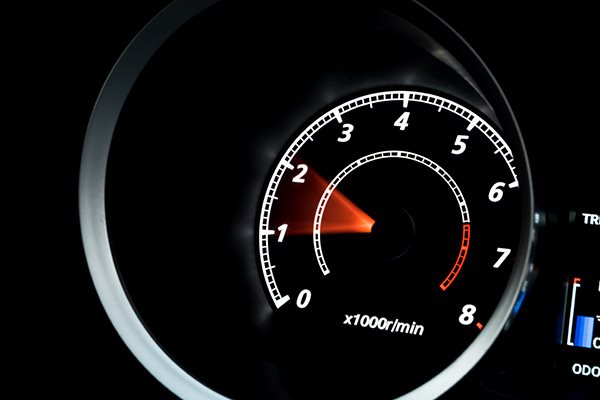
A torn mount produces a different repair need from a cylinder misfire. During an inspection, we compare engine smoothness with the vibration felt inside the car and examine mount condition. A tachometer that remains steady doesn't by itself prove a mount is responsible, but it adds context. Replacing ignition parts won't correct a worn mount, and replacing a mount won't fix uneven combustion.
The Air Conditioner Changes Idle Load
When the air conditioner compressor engages, the engine has to carry extra load. The computer adjusts idle control to compensate, but a weak ignition system, dirty throttle passage, or air-control problem may struggle with the change. You may notice a short dip in RPM, a stronger shake, or a near-stall when the climate system switches on. Some compressor faults also create abnormal mechanical load.
Notice if the vibration appears with the A/C off, during cooling operation, or when electrical accessories are running. That observation helps isolate the conditions.
We consider throttle control, intake air, electrical supply, and accessory operation as needed. Regular maintenance includes checking intake components and following the manufacturer's ignition service schedule, but a new symptom still needs its own inspection.
When Rough Idle Needs Prompt Service
A mild shake that doesn't affect driving should still be evaluated before it becomes more frequent. A flashing check engine light with severe engine shaking is more urgent because active misfires can damage the catalytic converter.
Stalling in traffic, strong fuel odors, or a sudden loss of power also require quick action. Avoid prolonged driving if the engine repeatedly threatens to stall.
Share these details at your appointment:
- Shaking only when stopped in Drive
- A change when the A/C turns on
- Roughness that begins after warm-up
- A steady or flashing check engine light
- Recent repairs, fuel stops, or ignition service
The pattern helps reproduce an intermittent problem without unnecessarily stressing the engine. A clear description often leads to more efficient testing.
Verify the Cause Before Replacing Parts
The inspection should distinguish an unevenly running engine from vibration caused by its mounts or accessories. Test results guide repairs to intake leaks, ignition parts, fuel delivery, or mechanical components. Afterward, the vehicle needs to idle properly under the same conditions that first revealed the problem. Clearing a code without correcting the symptom isn't proof of a completed repair.
If the engine runs well after service, document what was repaired and what maintenance remains due. That information helps if a different vibration develops later. A stable idle is more than a comfort issue when the engine has been close to stalling, so finding the cause early is worth the effort.
Get Rough Idle and Engine Inspection in Corpus Christi, TX, With TC Auto Service
TC Auto Service in Corpus Christi, TX, investigates rough idle, misfires, engine mounts, and intake concerns. We'll explain the inspection results and recommend repairs supported by testing.
Call TC Auto Service or schedule an engine inspection online today.