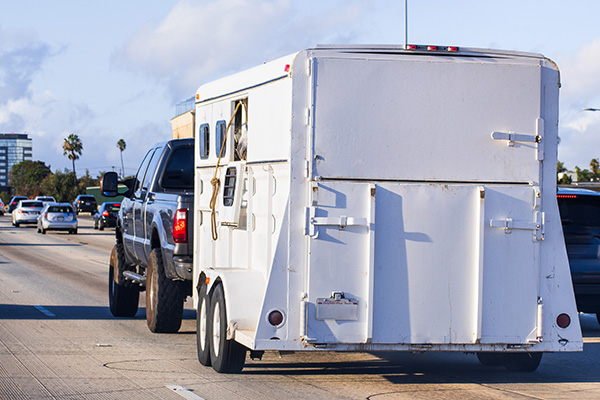
The truck needs tires, and two sets in the same size carry different load ratings. One costs less; the other is described as heavier-duty. With tools in the bed during the week and a trailer on some weekends, choosing by appearance or a sales label doesn't tell you which set fits the job.
Start with the truck and what it actually carries. Tire capacity is one part of the limit, alongside the vehicle, axles, wheels, and towing equipment. Buying a tire with a higher rating cannot make an overloaded truck acceptable or fix a load placed poorly in the bed.
Start With the Vehicle's Labels and Specifications
The tire information label identifies the original tire size and recommended cold pressures. The certification label provides vehicle and axle weight ratings. Read the labels on the actual truck rather than relying on specifications for a similar model, since configuration and equipment affect available capacity.
Gross vehicle weight rating is the permitted total loaded vehicle weight. Gross axle weight ratings limit the weight on each axle. Replacement tires must still meet the truck's required load capacity, even when today's load is light. A tire rated to carry more weight doesn't automatically increase what the truck's brakes, frame, axles, and manufacturer ratings allow.
Weigh the Truck as It Will Be Used
A scale reading is more useful than estimating the weight of tools, cargo, and passengers. Permanent equipment, a toolbox, added racks, and trailer tongue or pin weight all use capacity. A pickup weighed empty before accessories were installed doesn't represent its current working load.
Obtain front and rear axle weights with the intended load and towing setup. One axle can approach its limit before the total vehicle rating is reached. Cargo concentrated to one side can create further imbalance. The load should be distributed and secured appropriately rather than assuming two rear tires will always share it equally.
Load Index and Load Range Tell You Different Things
Load index is a code tied to a tire's load capacity under specified conditions. Load range describes a tire's construction and pressure category, particularly on light-truck tires. A higher letter doesn't mean every tire carrying that letter supports the same number of pounds across all sizes.
When comparing options, consider the full size, service description, and load information together. Two tires that fit the same wheel can have different capacities or intended applications. The required speed rating and manufacturer-approved fit also factor into the selection. Don't reduce the entire choice to whether a tire is advertised as ten-ply.
The Correct Pressure Supports the Rated Load
A tire's ability to carry weight depends on inflation as well as its construction. The maximum pressure molded into the sidewall is not automatically the correct everyday setting for your truck. Start with the vehicle's requirements and use the appropriate load-and-inflation information when an approved change needs evaluation.
Switching between passenger-type and light-truck tires isn't a simple same-size substitution. Pressure requirements can differ, and the wheels and valves must be suitable too. Set pressure cold, using an accurate gauge, and don't bleed pressure from hot tires after driving. A firmer ride doesn't prove the load capacity is now adequate.
Match the Entire Setup, Including Dual Wheels
On a truck with dual rear wheels, single and dual load ratings must be read correctly. Tire matching and spacing also require attention. A dual-wheel setup is not evaluated by simply multiplying the largest number on one sidewall without considering how the tires are installed and inflated.
Bring the actual specifications to a tire inspection before buying a different setup. A practical comparison needs enough information to evaluate the combination, rather than choosing from tire size alone:
- Vehicle and axle weight ratings from the truck's labels
- Loaded front and rear axle weights
- Existing tire size, load index, and load range
- Wheel and valve ratings for the proposed inflation pressure
- Trailer tongue or pin weight and permanently installed equipment
Heat and Wear Still Need Attention After Installation
A suitable load rating doesn't protect a tire from underinflation, impact damage, or excessive wear. A heavily loaded tire with insufficient pressure flexes excessively and builds heat. Long drives make it especially important to begin with the correct cold pressure rather than judging inflation by how the sidewall looks.
Check pressure and the full tread width during regular maintenance, including the less-visible inner tires on a dual-wheel truck. Revisit the setup when hauling habits change, or you add permanent equipment. The right tire decision is based on measured load and compatible specifications, not a blanket rule that every working pickup needs the stiffest available tire.
Get Truck Tire Service In Corpus Christi, TX, With TC Auto Service
TC Auto Service in Corpus Christi, TX, can review your truck's tire requirements and hauling setup before selecting a replacement set.
Contact us to discuss tire load ratings and bring your vehicle labels and loaded weight information.